

Buffalo Steaks
Lazy RRse
Our South Dakota raised, grass-fed buffalo meat tastes great and is loaded with good stuff and lacks the bad stuff. It is the mission of the Lazy RRse Buffalo Ranch to supply quality buffalo meats to our customers, while honoring and respecting the North American Buffalo.

Tall Grass Buffalo
Grassfed Buffalo Meat — Nature has created a species of animal that is uniquely superior and naturally nutritious. Tall Grass Buffalo are raised the way nature intended — ranging free with little human interference, eating only native grasses, containing no artificial hormones, no antibiotics and no steroids. The natural vitality of Tall Grass Buffalo is maintained throughout our processing where we use no preservatives or chemical tenderizing agents.
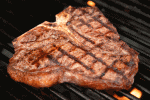
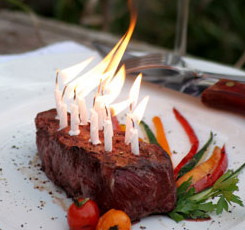
Wild Idea Buffalo Company
I would never have imagined that I would be a meat purveyor but, in 1997, in an effort to keep the ranch alive, I started a small meat company called Wild Idea Buffalo Co. The idea was simple: supply delicious, healthy, humanely harvested, red meat to consumers interested in sustainability. That turned out to be a sort of a beginning. The business continues to grow and now we have a non-profit organization with our Native American friends called "Sustainable Harvest Alliance".
Catron Ranch
Catron Ranch was established in 1884, surrounded by the banks of the Little Missouri River. Once a traditional livestock operation, we converted the 18,000 acre ranch to a buffalo operation in 1999. Located in the very heart of Harding County, South Dakota, the landscapes’ hard grasses and sheltered timber draws make our grass-fed, grain finished buffalo some of the best you’ll find. Finishing our animals on grain ensures consistency in taste and tenderness, which results in a better culinary experience for you. It’s no coincidence our meat is being served at fine eating establishments across the country.
Alta Vista Bison Farm
Our farm, known as Alta Vista, was carved out of the New England forest on a hill in the town of Rutland in 1724.
For the next 225 years, the farm was primarily a livestock and dairy farm. It was bought by the Mann Family in 1951 and named Alta Vista, meaning “high view”. The farm was operated as a dairy farm until 1965. The bison arrived in the Fall of 1968 with the purchase of two heifer calves from South Dakota. Additional animals were purchased over the next few years and a small herd of five to 10 animals was maintained for the next 20 years.

About | Contact | Legal/Privacy | Links | Sitemap
© 2008-12 Meals in the Mail | All Rights Reserved | Directory Images + Text © Respective Websites
Highest Rated
Rating | |
|---|---|
| The Mississippi Gift Company | 100% |
| Wickles | 100% |
| Mill Basin Kosher Delicatessen | 100% |
| Cowboy John's Grillin' And Dippin' Sauce | 100% |
| Koegel Meat Company | 100% |
| Sturgis Beef Jerky | 100% |
| Wegmans | 100% |
| The Bourbon Ball | 100% |
| North Country Smokehouse | 100% |
| Dee's Cereal | 100% |
| Michael's of Brooklyn | 100% |
| Nodine's Smokehouse | 100% |
| Silk Fudge | 100% |
| Wild West Spices | 100% |
| Marshmallow Fluff | 100% |
Recent Reviews
- I hope this investments for
- Porky's Delight Replicated
- Seasoning
- Wood Pecan - Montgomery, Alabama
- I must be mistaken.